Our offices will be closed for the holiday season from December 25, 2025, to January 11, 2026. For urgent matters, please contact support@pecb.com.
An advanced penetration tester is a cybersecurity professional who conducts in-depth technical security assessments by simulating complex and targeted cyberattacks. Their role goes beyond automated scanning and standard testing approaches, focusing instead on identifying how multiple weaknesses can be combined to compromise systems and networks.
Advanced penetration testers evaluate the effectiveness of modern security controls, including endpoint protection, network defenses, and monitoring solutions, by testing them in realistic enterprise environments. They operate across multiple stages of an attack, from initial access to lateral movement and privilege escalation, with the goal of demonstrating the real-world impact of security weaknesses.
This role requires a strong understanding of enterprise infrastructures, operating systems, applications, and identity systems. The primary objective is not only to identify technical weaknesses but also to clearly communicate their potential impact and provide actionable recommendations that help organizations improve their overall security posture.
Advanced penetration testers are essential because they help organizations understand how real-world attackers can compromise systems that appear secure during routine assessments. While automated tools and standard testing approaches are effective for identifying known issues, they often fail to show how weaknesses can be combined or exploited by attackers in real-world attacks. Advanced penetration testing addresses this gap by focusing on realistic attack paths and operational impact.
By simulating complex attack scenarios, advanced penetration testers evaluate how well security controls perform under sustained and targeted attack conditions. This includes testing the organization’s ability to detect malicious activity, respond effectively, and contain threats before they escalate. The results provide valuable insight into the effectiveness of existing security measures, processes, and team coordination.
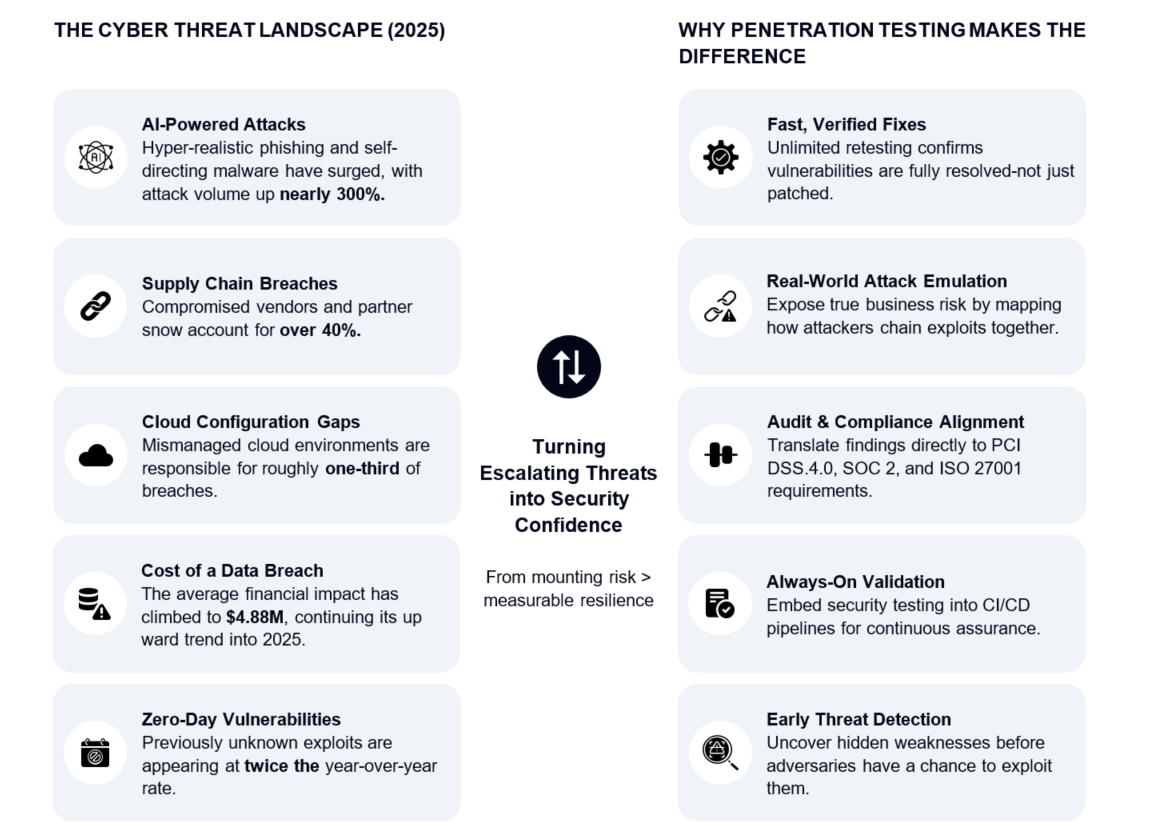
Source: DeepStrike[1]
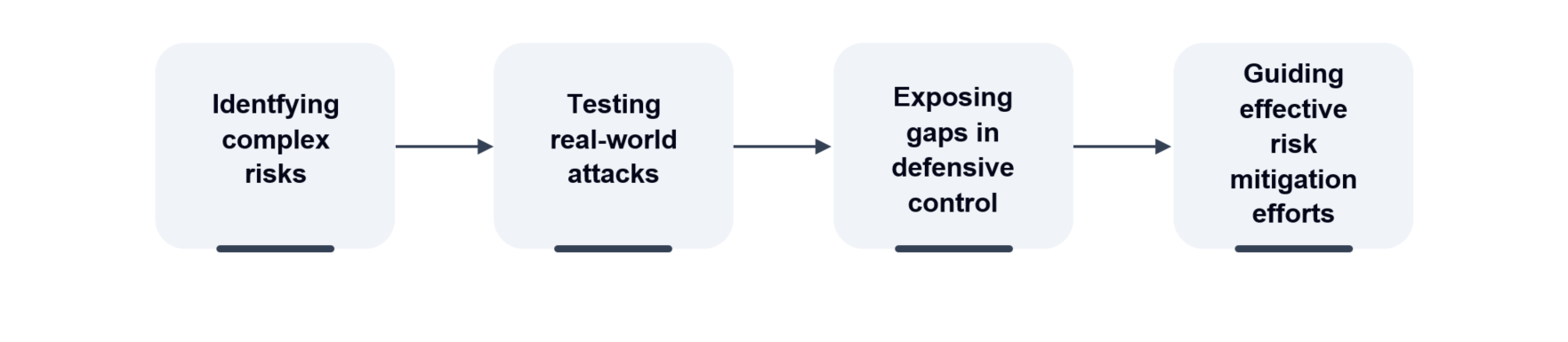
Additionally, advanced penetration testing supports better risk prioritization by demonstrating which weaknesses could lead to significant operational, financial, or reputational impact if exploited. This enables organizations to move beyond vulnerability counts and focus on meaningful risk reduction. As a result, security programs become more proactive, resilient, and aligned with business objectives rather than purely compliance-driven. Advanced penetration testing provides organizations with a structured approach to understanding and managing cyber risk. As illustrated below, it supports informed decision-making by:
[1] Khalil, Mohammed. “What Is Penetration Testing? A 2025 Guide to Ethical Hacking Your Systems.” DeepStrike. Last updated October 13, 2025. Accessed February 9, 2026. https://deepstrike.io/blog/what-is-penetration-testing

The PECB Certified Advanced Penetration Tester certification provides the following benefits:
The PECB Certified Advanced Penetration Tester training program is designed to provide in-depth education in advanced penetration testing techniques and real-world attack scenarios. PECB experts will support you throughout your training and certification journey, helping you strengthen your technical capabilities and professional confidence.
To begin with the first step, contact us here.
PECB Certified Advanced Penetration Tester Available Training Courses
Learn more about the role of the Certified Advanced Penetration Tester by attending the PECB Certified Advanced Penetration Tester training course.
Download and personalize our request letter to ask your employer for funding.